Hey there! I’m a supplier of LUG Butterfly Valves, and today I wanna talk about whether our LUG Butterfly Valves can be used for corrosive fluids. It’s a question I get a lot, so let’s dive right in. LUG Butterfly Valve

First off, let’s understand what a LUG Butterfly Valve is. It’s a type of valve that uses a rotating disc to control the flow of fluid through a pipe. The "LUG" part refers to the lug – style design on the valve body, which allows it to be mounted between two flanges easily, and it provides better support and stability compared to some other types of valves.
Corrosive fluids are a real challenge in many industries. They can eat away at materials, causing leaks, failures, and all sorts of problems. So, the big question is, can our LUG Butterfly Valves stand up to these tough fluids?
The answer is, it depends. And here’s where things get interesting.
The construction materials of the valve play a huge role. Our LUG Butterfly Valves are usually made with a variety of materials, and we can choose the right one based on the type of corrosive fluid. For instance, if we’re dealing with mild acidic solutions, a valve made of stainless steel can be a good option. Stainless steel has a certain amount of chromium in it, which forms a passive layer on the surface. This layer acts as a shield, protecting the metal from further corrosion. It’s like having a suit of armor for the valve.
But if the fluid is really aggressive, like concentrated sulfuric acid or some strong alkalis, we might need to go for more specialized materials. One option is a valve lined with a corrosion – resistant polymer like PTFE (Polytetrafluoroethylene). PTFE is known for its excellent chemical resistance. It can withstand a wide range of corrosive substances, from acids to bases. When we line the inside of the valve with PTFE, it creates a barrier between the corrosive fluid and the valve body. So, even if the fluid is super – strong, it won’t be able to attack the underlying metal.
Another factor to consider is the disc material. The disc is the part that rotates to control the flow, and it’s in direct contact with the fluid. We can use different materials for the disc as well. For less corrosive applications, a stainless – steel disc might work fine. But for more severe conditions, we can use a disc made of a high – nickel alloy. These alloys have excellent corrosion resistance properties, especially in environments where there are high levels of chlorides or other corrosive elements.
Now, let’s talk about some real – world applications. In the chemical industry, where there are all sorts of corrosive chemicals being transported and processed, our LUG Butterfly Valves have been put to the test. Many chemical plants use them to control the flow of acids, bases, and solvents. And in the water treatment industry, where there are often chemicals added to the water for purification, our valves are used to regulate the flow of these corrosive substances.
But it’s not just about the materials. The design and manufacturing process also matter. We make sure that our valves are well – engineered. The seals are carefully designed to prevent any leakage of the corrosive fluid. A good seal is crucial because even a small leak can cause big problems over time. We also pay attention to the machining of the valve parts. Smooth surfaces reduce the chances of the fluid getting trapped and causing localized corrosion.
One thing I should mention is that regular maintenance is key. Even the best – made valve will eventually show signs of wear and tear. We recommend doing regular inspections, checking the seals for any signs of damage, and cleaning the valve if necessary. By doing this, we can extend the life of the valve and ensure that it continues to work properly in a corrosive environment.
So, to sum it up, yes, our LUG Butterfly Valves can be used for corrosive fluids. But we need to choose the right materials based on the specific fluid and its properties. With the right material selection, proper design, and regular maintenance, our valves can provide reliable service in some of the toughest corrosive environments.
If you’re in an industry that deals with corrosive fluids and you’re looking for a reliable valve solution, we’re here to help. We have a team of experts who can help you select the perfect valve for your needs. Whether you’re in the chemical, water treatment, or any other industry, we can work with you to find the best fit.
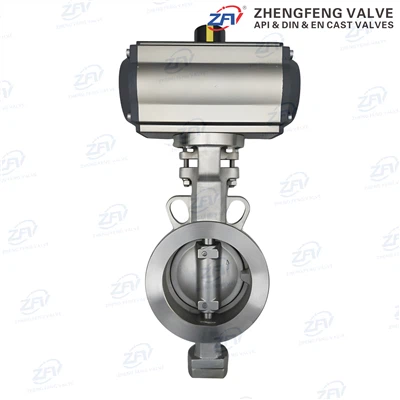
And if you’re interested in learning more about our LUG Butterfly Valves for corrosive fluid applications or want to discuss a potential purchase, don’t hesitate to reach out. We’d love to have a chat about how our valves can meet your requirements and help you keep your operations running smoothly.
Triple Offset Butterfly Valve References:
- "Valve Handbook" by Muhammad Nawaz
- "Corrosion Science and Engineering" textbooks for general knowledge on corrosion and materials.
Zhejiang Zhengfeng Valve Co., Ltd.
We’re well-known as one of the leading lug butterfly valve manufacturers and suppliers in China. With abundant experience, we warmly welcome you to buy bulk advanced lug butterfly valve from our factory. If you have any enquiry about cooperation, please feel free to email us.
Address: Hengtong Road, Wuxing Industrial Park, Wenzhou, Zhejiang, China. 325105
E-mail: sales@zfvalve.com
WebSite: https://www.zfvcns.com/
