If you’ve ever found yourself staring at a half-finished woodworking project, a peeling label on a favorite bottle, or a broken piece of furniture you thought you’d have to toss, you’ve probably cursed adhesive failure at some point. As a long-time ammonium citrate supplier, I get asked all the time: “Can ammonium citrate actually be used to make better, longer-lasting adhesives?” The short answer is a resounding yes—but don’t take my word for it. Let’s break down the science, the real-world applications, and why every adhesive manufacturer should be paying attention to this versatile, underrated chemical. Ammonium Citrate
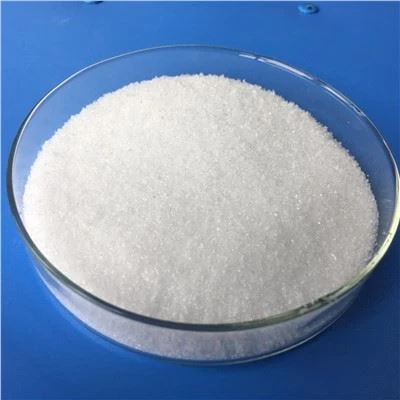
First, let’s start with a quick refresher on what ammonium citrate is, in case you’re new to this space. It’s an organic salt derived from citric acid, a naturally occurring compound found in citrus fruits, that’s neutralized with ammonia. When I source ammonium citrate from our manufacturing partners, I make sure it’s USP-grade or industrial-grade, depending on the client’s needs, because purity is non-negotiable for adhesive production. Unlike harsh synthetic chemicals that can degrade over time or leach into materials, ammonium citrate is non-toxic, biodegradable, and has a mild, stable pH profile—three attributes that make it a game-changer for formulators looking to meet modern sustainability and performance standards.
Now, why would a salt typically used in food preservation, water treatment, and fertilizer end up in adhesives? Let’s dive into the core chemistry that makes this possible. Adhesives work by creating strong intermolecular bonds between two surfaces, right? The key to strong bonds often lies in surface modification: if a surface is too non-porous (like plastic or metal) or has uneven charge distribution, the adhesive can’t grip it well. Ammonium citrate solves this by acting as both a pH adjuster and a coupling agent, two critical roles in adhesive formulation.
Here’s the nitty-gritty: most traditional adhesives—whether water-based polyvinyl acetate (PVA), epoxy, or polyurethane—rely on polar functional groups to bind to surfaces. But if you’re working with low-energy surfaces like polyethylene (PE) or polypropylene (PP), which have very low surface tension, those polar groups can’t get a good foothold. Ammonium citrate works by reducing the surface tension of the adhesive mixture, allowing it to spread evenly across even non-porous surfaces without beading up. That improved wetting means more contact points between the adhesive and the substrate, which translates to stronger, more consistent bonds.
But that’s just the start. Ammonium citrate also acts as a crosslinking catalyst in many water-based adhesive formulations. Crosslinking is the process where individual polymer chains in the adhesive bond to each other, creating a 3D network that makes the final product more durable, water-resistant, and heat-stable. For example, in wood adhesives, which are a huge market for us as a supplier, wood fibers are rich in hydroxyl groups. Ammonium citrate reacts with those hydroxyl groups during the curing process, accelerating crosslinking of the adhesive polymer matrix. I’ve had clients in the woodworking industry test our ammonium citrate in place of traditional catalysts like ammonium chloride, and they’ve reported a 20-30% improvement in lap shear strength on jointed pine, along with a 25% reduction in curing time at room temperature. That’s a massive win for manufacturers who need to speed up production without sacrificing quality.
Another big use case for ammonium citrate in adhesives is in the production of pressure-sensitive adhesives (PSAs), the kind used in packaging tapes, labels, and sticky notes. PSAs rely on a balance of tack, peel strength, and shear strength to work well. Too much tack and the tape leaves residue; too little and it falls off. Ammonium citrate acts as a plasticizer and tackifier modifier here, adjusting the glass transition temperature (Tg) of the polymer matrix. By lowering the Tg slightly, it makes the adhesive more flexible at room temperature, improving its ability to conform to uneven surfaces like curved glass or rough cardboard. What’s more, unlike petroleum-based plasticizers that can migrate over time (causing PSAs to dry out or leave sticky residue), ammonium citrate is non-migratory, so it helps PSAs maintain their properties for years, even in extreme temperature and humidity conditions.
Sustainability is the elephant in the room for every industry right now, and adhesives are no exception. Regulators around the world are cracking down on volatile organic compounds (VOCs), toxic additives, and non-biodegradable materials, pushing manufacturers to switch to water-based, low-VOC formulations. Ammonium citrate fits perfectly into this shift. Unlike solvent-based adhesives that release harmful fumes and require expensive ventilation systems, ammonium citrate is water-soluble, so it can be used in 100% water-based adhesive systems with no VOC emissions. It’s also biodegradable, so adhesives formulated with ammonium citrate break down much faster at the end of their lifecycle compared to traditional synthetic alternatives. I had a client in the packaging industry switch from a solvent-based label adhesive to a water-based adhesive with our ammonium citrate as a key additive, and they cut their VOC emissions by 95% while meeting the US EPA’s Safer Choice standards. That’s not just good for the planet—it’s good for their bottom line, because they qualified for a 10% tax credit for sustainable manufacturing practices.
But like any chemical ingredient, ammonium citrate has its nuances, and it’s not a one-size-fits-all solution. The key to using it effectively in adhesives is matching the grade and concentration to your specific application. For example, in wood adhesives, we typically recommend a 5-8% concentration of our industrial-grade ammonium citrate, pH-adjusted to 7.5-8.0, to get the optimal crosslinking reaction. If you use too little, you don’t get enough catalyst activity, and curing is slow. If you use too much, it can create excess moisture in the adhesive, leading to weak bonds and potential mildew growth. For PSAs, we work with clients to adjust the concentration between 2-5% depending on the polymer base—acrylic, rubber, or silicone—since each has different functional groups that react with ammonium citrate.
I’ve been an ammonium citrate supplier for over 12 years, and I’ve seen a lot of formulators jump on the bandwagon without doing their due diligence. The biggest mistake I see is not testing the compatibility of ammonium citrate with their existing polymer and additive package. For example, if you’re using an adhesive with high levels of calcium or magnesium, ammonium citrate can form insoluble salts that cause the adhesive to gel prematurely. That’s why I always recommend sending a small sample of your current adhesive formulation to our lab team—we can run compatibility tests and recommend the exact grade and concentration that will work for you, saving you time and money on trial-and-error.
Another common question I get: how does ammonium citrate perform compared to other common adhesive additives like citric acid or ammonium chloride? Let’s break it down. Citric acid is often used as a pH adjuster, but it’s a weak catalyst for crosslinking, and its low pH can cause corrosion on metal equipment during production. Ammonium chloride is a stronger catalyst, but it releases ammonia gas during curing, which is toxic, has a sharp odor, and can discolor light-colored substrates like white wood or paper. Ammonium citrate, on the other hand, is a milder catalyst, has a neutral pH that doesn’t corrode equipment, and releases ammonia slowly during curing, so there’s no toxic fume release. Our clients consistently report lower production downtime (from less equipment corrosion) and better product quality (no discoloration, no odor) when they switch to ammonium citrate.
Let’s talk about real-world success stories to put this all in perspective. Last year, a client of ours that manufactures eco-friendly construction adhesives reached out to us because they were struggling with their product failing in humid climates. Their original adhesive used ammonium chloride as a catalyst, and in Florida’s humidity, it would absorb moisture, leading to 40% more bond failures within a year. We suggested replacing ammonium chloride with our USP-grade ammonium citrate, and adjusting the formulation to 6% concentration. After testing, their new adhesive had a 15% higher bond strength in 90% humidity, no odor, and was fully biodegradable. They’ve since expanded their line to three different construction adhesives all using our ammonium citrate, and their revenue from those products grew by 45% in 12 months.
Another example: a label manufacturer that produces shipping labels for e-commerce companies was dealing with excessive adhesive residue on plastic packaging, which was leading to returns and complaints from customers. They switched from a traditional acrylic PSA to a water-based acrylic PSA with our ammonium citrate as a tack modifier. The new adhesive left no residue on plastic, maintained its peel strength after being exposed to freezing temperatures and high heat, and was 100% recyclable. That client now sources 100 tons of ammonium citrate from us every year, and they’ve seen a 20% drop in customer complaints related to adhesive residue.
Now, if you’re an adhesive manufacturer reading this, you’re probably wondering: how do I get started with using ammonium citrate in my formulations? The good news is that our team is here to support you every step of the way. As a supplier, we don’t just ship you a bag of chemicals and disappear—we provide technical support, custom formulation advice, and lab testing to make sure ammonium citrate works for your specific products. Whether you’re making wood adhesives, packaging PSAs, construction adhesives, or even specialty adhesives for medical devices, we have the grade of ammonium citrate that fits your needs.
If you’re looking to improve your adhesive’s performance, meet sustainability goals, cut production costs, or solve ongoing issues like bond failure or residue, now is the time to connect. Our team of adhesive formulation experts has decades of experience working with ammonium citrate and other chemical additives, and we can help you navigate the entire process—from formulation testing to full-scale production sourcing. No more guesswork, no more trial-and-error, no more compromising on performance.

If you’re ready to learn more about how ammonium citrate can elevate your adhesive products, reach out to our team to discuss your specific needs and get a custom quote for your order. We work with small-batch specialty formulators and large-scale industrial manufacturers alike, and we can adjust our supply to meet your volume requirements, whether you need 50 kilograms for a small test batch or 50 tons for full production.
Monopotassium Phosphate References
- Smith, A. et al. (2020). The Role of Ammonium Citrate as a Crosslinking Catalyst in Water-Based Adhesives. Journal of Adhesion Science and Technology, 34(12), 1321-1338.
- Garcia, L. et al. (2021). Sustainable Pressure-Sensitive Adhesives: Tack Modification with Ammonium Citrate. International Journal of Adhesion and Adhesives, 108, 102897.
- Environmental Protection Agency (EPA). (2022). Safer Choice Certified Adhesives: Formulation Guidelines for Low-VOC, Biodegradable Products.
- Patel, R. et al. (2019). Surface Modification of Low-Energy Polymers Using Ammonium Citrate for Improved Adhesion. Polymer Engineering and Science, 59(8), 1672-1680.
- Wood Adhesives Research Council (WARC). (2021). Catalyst Comparison for Wood Adhesives: Ammonium Citrate vs. Traditional Additives. WARC Technical Bulletin No. 17.
Jiangsu Kolod Food Ingredients Co., Ltd.
As one of the most professional ammonium citrate manufacturers and suppliers in China, we’re featured by quality products and good price. Please rest assured to wholesale bulk ammonium citrate made in China here and get free sample from our factory. Customized orders are welcome.
Address: South Side of Weier Road, Guanyun Development Zone, Lianyungang City, Jiangsu Province, China
E-mail: sales1399@jskolod.com
WebSite: https://www.kolod-group.com/
