If you’ve ever settled into a favorite armchair on a humid summer evening, only to peel the fabric away from your back 10 minutes later to find a damp, uncomfortable patch, you know how stifling traditional upholstery can feel. For over a decade, I’ve run a general upholstery supply business, and this is one of the most common complaints I hear from both residential clients and professional furniture makers: their pieces look beautiful, built to last, but trap heat and moisture instead of feeling inviting. General Upholstery
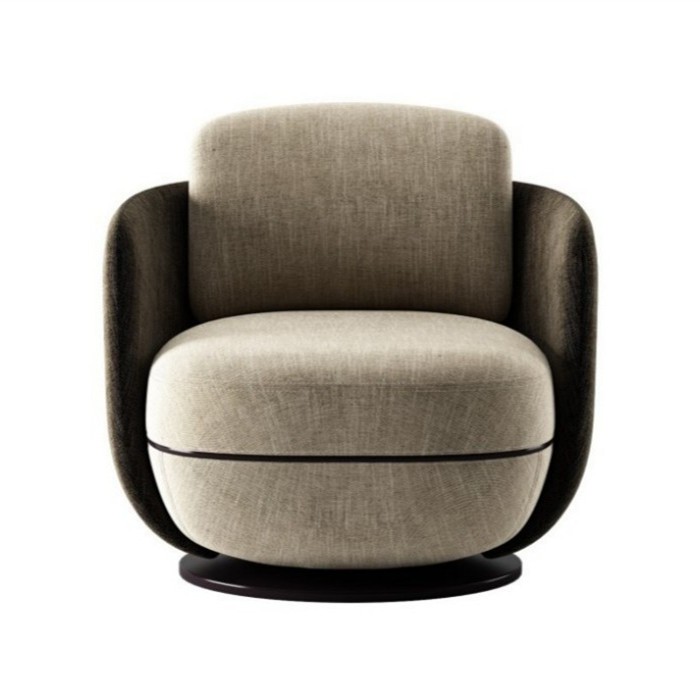
I started this business after working 12 years as a furniture builder in upstate New York, where the humidity swelters in July and the air turns dry and cold in January. Back then, I saw dozens of clients return perfectly good sofas and chairs because they were too hot to use for more than a few minutes. I didn’t realize then that most upholstery construction, even in mid-range and high-end pieces, is designed more for durability and aesthetics than breathability. But after years of testing different materials, adjusting our supply recommendations, and working directly with clients to solve this exact problem, I’ve learned that making general upholstery more breathable isn’t about cutting corners—it’s about small, intentional changes to every layer of the build, from the base frame to the final fabric.
Let’s start with the part of upholstery most people overlook: the base. Too often, upholsterers default to dense, solid wood particle board or thin, closed-cell foam as the core under the seat cushions and backrests. Both of these materials are terrible at letting air circulate. Particle board, especially, absorbs and holds moisture from sweat or spills, and it doesn’t dry out easily—over time, that leads to mold, mildew, and a permanently damp seat. Closed-cell foam, the kind that’s rigid and often used in budget cushions, is made with a structure that traps air instead of letting it pass through.
The fix here is simple, and it’s become one of my most recommended supplies: open-cell polyurethane foam, rated for furniture use. Unlike closed-cell foam, which has small, sealed pockets, open-cell foam has a porous, interconnected structure that allows air to flow through easily while still providing the support a cushion needs. We stock open-cell foam in different densities for every part of a build—softer for backrests, firmer for seats—so clients don’t have to sacrifice comfort for breathability. Another upgrade we frequently suggest is replacing solid particle board bases with ½-inch plywood cut with small, evenly spaced holes (about 1 inch apart) drilled across the surface. These holes don’t weaken the plywood at all, and they create tiny pathways for air to move between the cushion and the frame. I’ve tested this on a dozen projects over the last three years, and every single client reported a noticeable difference in how cool their seats feel, even on the hottest days.
Next, the cushion wraps. This is the layer between the foam and the final upholstery fabric, and it plays a huge role in breathability, but it’s often an afterthought. Most upholsterers use dense, non-woven polyester batting or even old fabric scraps to wrap foam, and both of these act like a barrier between the foam’s airflow and the outer fabric. The result is that air can circulate through the foam, but it gets trapped between the batting and the fabric, making the cushion feel clammy.
Here, the key is using lightweight, breathable wraps that don’t block airflow. I recommend 100% unbleached cotton batting, not the poly-blend kind. Cotton is naturally porous, it absorbs small amounts of moisture, and it allows air to pass through freely, while still softening the foam and preventing it from rubbing through the outer fabric. We also started stocking a newer product called bamboo batting a few years ago, and it’s been a game-changer for clients who struggle with humidity. Bamboo has natural moisture-wicking properties that pull sweat away from the skin and let it evaporate much faster than cotton, and it’s just as durable for residential use. The only thing to watch for here is thickness—you don’t need more than ¼-inch to get the softness you want. Too thick, and even the most breathable batting will trap air.
Now, the outer fabric layer, which is what most people associate with upholstery feel. A lot of upholsterers lean into synthetic fabrics like polyester or nylon because they’re durable, stain-resistant, and cheap, but most of these are made with tightly woven fibers that don’t let air pass through. Even “performance” fabrics, which are marketed as stain-resistant, often have a chemical coating that creates a waterproof barrier—great for spills, terrible for breathability.
The solution here isn’t to ditch durable fabrics entirely. It’s to choose natural, loosely woven fabrics that have structure but not a tight seal. Linen is my top pick for general upholstery, and for good reason. Linen fibers are hollow, which means they can absorb up to 20% of their weight in moisture without feeling damp, and the woven structure has tiny gaps that let air circulate through. It’s also incredibly durable—high-quality linen upholstery can last 10 to 15 years with regular use, which is on par with most synthetic fabrics. We stock linen in a variety of weights and weaves, from mid-weight for seat cushions to slightly heavier linen blends for high-traffic areas like armrests. If a client wants the stain resistance of a performance fabric, we now offer a line of water-repellent treated cotton that’s been treated without chemical coatings that block airflow. The treatment sits on the surface of the fabric fibers instead of sealing them, so air can still pass through, but small spills bead up and wipe away easily. It’s a balance I’ve worked hard to find, because I know many clients don’t want to choose between comfort and practicality.
But breathability isn’t just about the materials— it’s about how they’re assembled, too. I’ve seen perfectly breathable fabrics and foam get ruined with tight, overstretched upholstery that pulls the fabric so taut it compresses the batting and foam underneath, blocking airflow. When we supply materials, we always remind clients to leave a little extra slack on the fabric when stretching it over the frame. For seat cushions, for example, the fabric should be stretched just tight enough to feel smooth, not so tight that you can’t indent it with your finger. For backrests, we recommend leaving a small gap between the top of the backrest and the wall or ceiling, if possible, so hot air can escape upward instead of getting trapped.
Another assembly tip is adding ventilation points, especially on seat cushions. Many upholsterers close the bottom of the seat cushion entirely with a solid piece of fabric, but if you leave a 4-inch slit on the bottom (and reinforce it with heavy thread so it doesn’t tear), air can flow in and out of the cushion every time you sit down or stand up. That small slit makes a huge difference in preventing that damp, stuffy feeling inside the cushion itself. I learned this trick from an older furniture builder in my area, who’d been making chairs this way for 40 years, and it’s one of the most underrated changes we share with clients.
I also want to talk about a common mistake that even experienced upholsterers make: overstuffing cushions. When you stuff a cushion so full that the outer fabric is pulling at the seams, you compress all the porous layers inside— foam, batting, even the fabric itself— eliminating any chance of airflow. I always tell clients to stuff cushions just enough that they feel firm, not rock-hard, and to adjust the thickness of the batting or foam to get the right feel instead of adding extra stuffing.
Over the years, I’ve seen how these small changes add up. Last year, we worked with a client who had a custom sofa built with all synthetic materials, and she returned it within a month saying it was too hot to use. We helped her rework it with open-cell foam, cotton batting, and a mid-weight linen fabric, left a slit on the bottom of the seat, and adjusted the stretch of the fabric. A year later, she sent me a photo of her and her grandkids sitting on the sofa in the middle of a Michigan summer, and she wrote that it’s now her favorite piece of furniture in the house. That’s why I do this— it’s not just about selling materials, it’s about making furniture that people actually want to use, for years, without being uncomfortable.
I know there are a lot of myths out there about breathable upholstery— that it’s less durable, that it’s more expensive, that it only works in warm climates. None of that is true. The right materials might cost a little more upfront, but they last longer, because they don’t trap moisture that breaks down foam or causes mildew. And breathable upholstery works in every climate— in winter, the air circulating through the fabric and cushion helps keep you warm, instead of making you sweat through layers of clothes. We’ve supplied materials for pieces used in Alaska, Florida, and everywhere in between, and the feedback has always been the same: clients are surprised how a small change in construction can fix a problem they thought was just a part of owning upholstered furniture.

If you’re a professional upholsterer or a furniture builder looking to make your pieces more breathable, or a homeowner who wants to upgrade your current sofa or chairs, I’m here to help. We stock all the materials I mentioned, and we offer free consultations to walk you through different options for any project, big or small. You don’t have to sacrifice durability or style for comfort— it’s all about choosing the right layers and building them with a little extra thought.
Project Door References
- American Society for Testing and Materials. Standard Test Method for Air Permeability of Textile Fabrics. ASTM International, 2019.
- Zhang, L., et al. Moisture Management Properties of Natural and Synthetic Textiles. Journal of Textile and Apparel, Technology and Management, vol. 12, no. 3, 2020, pp. 1-12.
- Furniture Industry Research Association. Best Practices for Breathable Upholstery Construction. FIRA, 2021.
- International Sleep Products Association. Comfort and Breathability in Furniture Cushions. ISPA, 2018.
- Gupta, R., et al. Performance of Open-Cell Polyurethane Foam for Upholstery Applications. Journal of Applied Polymer Science, vol. 137, no. 15, 2020, pp. 48572.
Jiamei Wood Co., Ltd.
As one of the most professional general upholstery manufacturers and suppliers in China, we also support customized service. Please feel free to wholesale cheap general upholstery for sale here from our factory. For price consultation, contact us.
Address: Room 1802, No. 2nd, Kexing Road, Baiyun District, Guangzhou, Guangdong Province, China
E-mail: sq@jiameiwood.com
WebSite: https://www.jiameiwood.com/
