Hey there! As a supplier of other auxiliary equipment, I often get asked about the installation costs. So, I thought I’d take a stab at breaking it down for you guys in this blog. Other Auxiliary Equipment

First off, it’s important to understand that the installation costs of other auxiliary equipment can vary quite a bit. There are a bunch of factors that come into play, and we’ll dig into those one by one.
Factors Affecting Installation Costs
Complexity of the Equipment
The more complex the equipment is, the higher the installation costs are likely to be. For example, if you’re talking about a simple conveyor belt for a small – scale workshop, the installation might be a piece of cake. You just need to set it up on a flat surface, connect a few parts, and you’re good to go. But if it’s a high – tech automated sorting system with multiple sensors, intricate programming, and custom – made components, well, that’s a whole different ballgame.
The technicians need to have a deep understanding of the technology involved. They’ll spend more time on calibration, programming, and debugging. And since they’re using their advanced skills, their hourly rates are usually higher. So, for complex equipment, expect the installation costs to be a significant portion of the total investment.
Location of Installation
Where you want to install the equipment matters big time. If it’s in a well – equipped and easily accessible factory floor, the installation process will be smoother. The technicians can bring in their tools and equipment without any hassle, and there’s usually enough space to work around.
On the other hand, if the installation is in a remote location, like a mining site in the mountains or an offshore oil rig, transportation alone can be a major expense. The installation team may need special permits to access the area. There might be limited accommodation and support facilities, which means the technicians may require additional allowances. And let’s not forget the challenges of dealing with harsh environmental conditions. The equipment may need to be specially adapted, and the installation process may take longer due to safety considerations.
Labor Costs
Labor costs vary from region to region. In some areas, skilled labor is more expensive. For instance, in developed countries or big cities, technicians are paid higher wages because of the higher cost of living and the demand for their skills.
Also, the experience level of the technicians matters. A newbie technician may charge less per hour, but they might take longer to complete the installation, which could end up costing you more in the long run. An experienced technician, on the other hand, can get the job done quickly and efficiently, even though their hourly rate is higher.
Additional Requirements
There could be other requirements that add to the installation costs. For example, if the equipment needs special electrical connections, like a high – voltage power supply, you’ll need to hire an electrician to make the necessary modifications. Or if it requires a specific foundation to be built, that’ll cost extra too.
Some equipment may also need to be integrated with existing systems in your facility. This could involve software programming, data transfer, and compatibility testing. All of these tasks require specialized skills and will increase the overall installation cost.
Examples of Installation Costs
Let’s take a look at a few examples to give you a better idea of how these costs can stack up.
Example 1: Small – Scale Packaging Machine
Suppose you’re running a small food business, and you want to install a basic packaging machine. This machine is relatively simple, with a straightforward installation process. The labor cost in your local area is around $30 per hour, and the installation is estimated to take about 4 hours. So, the labor cost for installation would be $30 x 4 = $120. There are no additional special requirements like electrical upgrades or foundation building, so the total installation cost is just $120.
Example 2: Large – Scale Industrial Chiller
Now, let’s say you’re a manufacturing company, and you need to install a large – scale industrial chiller. This chiller is quite complex, with advanced cooling technology and sophisticated control systems. The installation will take about 20 hours of work, and the technician’s hourly rate is $50 because of their high – level skills. So, the labor cost alone is $50 x 20 = $1000.
But that’s not all. The chiller needs a special concrete foundation, which costs $500 to build. It also requires a dedicated high – voltage electrical connection, and the electrician charges $300 for the job. In total, the installation cost for this industrial chiller is $1000 + $500+ $300 = $1800.
How to Minimize Installation Costs
Plan Ahead
Before you even purchase the equipment, sit down and plan the installation process. Think about factors like the location, the electrical requirements, and any additional infrastructure needed. By having a clear plan, you can avoid last – minute changes and additional costs.
Compare Installers
Don’t just go with the first installation team you find. Shop around and get quotes from different installers. Look at their experience, their reputation, and their pricing. Sometimes, you can find a great installer who offers a good balance between cost and quality.
Training
If possible, train your own staff on how to install the equipment. This can save you a lot of money in labor costs. However, this is only feasible for less complex equipment. Make sure the training is thorough and that your staff has the necessary skills and knowledge to do the job safely and correctly.
Contact Us for More Information
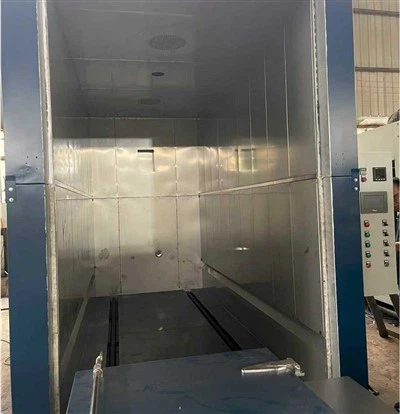
If you’re in the market for other auxiliary equipment and want to know more about the installation costs, we’re here to help. We’ve been in the business for a long time, and our team of experts can give you accurate estimates and advice on how to manage the installation process. Whether you’re a small business owner or a large – scale industrial operation, we’ve got solutions that fit your needs.
Other Auxiliary Equipment So, don’t hesitate to reach out to us for a consultation. We can discuss your specific requirements, provide detailed quotes, and guide you through the whole process from purchase to installation. Let’s work together to get your equipment up and running smoothly!
References
- "Industrial Equipment Installation Handbook"
- "Cost Estimation for Manufacturing Processes"
- Industry reports on auxiliary equipment installation trends
Three Water Machinery Co., Ltd.
Three Water Machinery Co., Ltd. is one of the most reliable manufacturers and suppliers of auxiliary equipment in China. With abundant experience, we warmly welcome you to buy advanced equipment for sale here and get quotation from our factory. Contact us for more details.
Address: No.15, Jiaye Road, Liuanzhuang Industrial Park, Beichen District, Tianjin, China
E-mail: sales@eqet.com
WebSite: https://www.eqet.com/
