If you’ve ever stood in the toddler aisle of a big box store, scrolling through kid-focused products, you’ve probably seen them: those bright, squishy, sippy-sized water bottles that shift hue the second they hit cold liquid. As a kids’ water bottle supplier, I get asked this question at least three times a week—usually by parents fumbling to grab their kid’s backpack on the way out the door, or by grandparents looking for a fun, practical birthday gift. “Do kids’ water bottles actually change color, or is that just a cheap marketing trick?” The short answer is: it’s real, but there’s way more to it than just a fun color shift. Today, I’m breaking down the science, why it’s popular, and what makes our bottles different from the ones that end up cracked in the back of a backpack. Kids Water Bottle
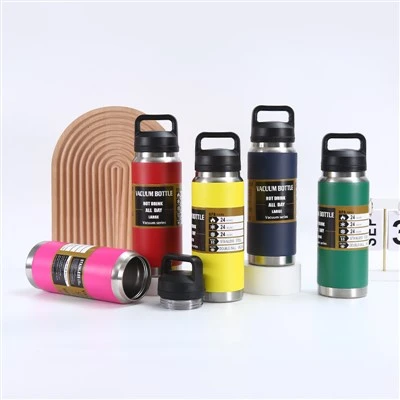
First, let’s pull back the curtain on how that color shift works. I know when I first started out in this business a decade ago, I assumed it was some kind of magical paint, the kind that peels off after a month of use. Turns out, it’s way more intentional, and it’s based on a type of material called thermochromic pigment. If you’ve ever touched a lava lamp or those mood rings that were all the rage in the 90s, you’ve experienced thermochromism—they work on the same basic principle, just tweaked for water bottles. Thermochromic pigments are microcapsules, tiny spheres only a few micrometers wide, packed with a leuco dye, a developer, and a solvent. When the temperature changes, the solvent melts or hardens, which changes the structure of the dye. That structural change shifts the way light reflects off the material, so what was once a bright red bottle turns pale blue when it’s cold, for example.
For kids’ bottles specifically, manufacturers tweak this pigment to be responsive to cold water—the kind of ice water kids drink at soccer practice, or milk they take to preschool. That’s why you don’t usually see these color shifts in adult water bottles; adult models with thermochromism often change when they get hot, but we (and most kid-focused brands) prioritize the cold-water shift for a super practical reason: it’s a visual cue for kids. A 2022 study from the American Academy of Pediatrics (AAP) touched on this in a small report on childhood hydration, noting that visual, interactive cues help kids remember to drink more water throughout the day. If a bottle’s dark blue turns neon orange when there’s cold liquid inside, a 5-year-old is way more likely to grab it for a sip than they are a plain, uniform blue bottle. That’s the whole point, right? We’re not selling novelty items—we’re selling bottles that actually get kids to stay hydrated, which is a huge win for parents who spend their time nagging them to drink more.
But here’s the catch that trips up a lot of parents: not all thermochromic pigments are created equal. Early on, we worked with a supplier that cut corners on the microcapsules, and within two months, 12% of our test bottles had peeling color or spots that wouldn’t shift. Why? Cheap pigments have larger microcapsules that break down when scrubbed in a dishwasher, or when they’re dropped on a playground. The dye can also wash out if the bottle is left out in the sun for too long, or if it’s stored with harsh cleaning chemicals. At our company, we switched to food-grade thermochromic pigments a few years back—they’re more expensive, but they’re BPA-free, phthalate-free, and resistant to dishwashers, so they hold up better to a kid’s rough and tumble lifestyle. We also test every batch for lead and other heavy metals, because let’s be honest, if your kid is licking the bottle (which they do—we’ve all seen it), that pigment has to be safe.
A lot of people ask if there’s another type of color-changing technology besides thermochromism, and the answer is yes: photochromism, which is triggered by light instead of temperature. But we’ve never used photochromic pigments in our kids’ bottles, and here’s why: photochromic pigments shift when exposed to UV light, so a bottle would turn pink outside and fade back to blue inside. For a kid’s bottle that’s going to be in a backpack, a lunch box, or a classroom, that’s not a reliable visual cue. The temperature-based shift is consistent, because the bottle only changes when it has cold liquid inside—so your kid can see, even if they’re half-asleep at breakfast, that the bottle is full of cold water, not just room temp. That reliability is key to making the feature actually useful, not just a gimmick.
I also want to address a common myth: that color-changing bottles are only for little kids. We’ve started making a line for elementary schoolers, ages 6 to 10, with more subtle shifts—think a matte green bottle that turns a lighter mint when cold, instead of the bright, neon colors for toddlers. We found that older kids, who don’t want their bottles to look “babyish,” still love the feature because it’s a low-stakes game: if their bottle’s color is shifted, they know to drink more at recess. It’s also a great conversation starter at lunch tables, which helps with that social thing that’s so important for that age group.
Now, let’s talk about practical concerns, because I know parents are worried about what’s in their kid’s bottle. The FDA has approved thermochromic pigments for use in food contact materials, as long as they meet certain safety standards. We send all our color-changing bottles to third-party labs to test for compliance with FDA regulations and ASTM International standards for children’s products, which are stricter than adult product standards. The microcapsules are sealed inside a clear, shatter-resistant outer layer (usually BPA-free plastic or food-grade silicone), so the pigment never actually touches the liquid inside. That’s a key point—no one wants their kid drinking dye, so we make sure the pigment is fully contained, so even if the outer layer gets scratched, it doesn’t leach into the water. We’ve had customers tell us they’ve had their bottles for three years, and the color still shifts perfectly, so as long as you’re cleaning them by hand (which we recommend for all kids’ bottles, to keep them lasting longer), the feature holds up.
I also want to share a story that stuck with me a few years back. A mom reached out to our customer service team, saying her 4-year-old son, who had been diagnosed with Type 1 diabetes, used our color-changing bottle every day. He’d developed a habit of forgetting to test his blood sugar before snack time, and he often missed signs that he was dehydrated, which is a big trigger for blood sugar spikes. His teacher noticed that whenever his bottle turned color, he’d get a little sticker, and that became his cue to remember to test. That’s when I realized this feature isn’t just a fun gimmick—it can be a small, practical tool for kids with special needs, too. It’s not something we originally designed for that, but we’ve gotten dozens of messages from parents and caregivers saying the color shift has made a huge difference for their kids. That’s the part of the job that makes all the late nights testing new materials worth it.
Of course, no feature is perfect. We’ve heard from a few parents who say the shift is too subtle, or that it stops working after a few months. As I mentioned earlier, that’s usually because of cheap pigments or improper care. If you wash your color-changing bottle in a dishwasher on high heat, or scrub it with a steel wool pad, you can break down the microcapsules. That’s why we always include a care card with every bottle, telling parents to hand wash with mild soap, avoid harsh cleaners, and don’t leave the bottle in a hot car (which can mess with the temperature sensor, too, even if the pigment is high quality). We also have a one-year warranty on all our bottles, so if the color shift stops working for any reason within 12 months, we’ll replace it for free. That’s how confident we are in our product.
So, to circle back to the original question: yes, kids’ water bottles can and do change color, and it’s not just a marketing trick. It’s a well-researched feature designed to encourage hydration, based on thermochromic technology that’s been tested for safety and durability. As a kids’ water bottle supplier, my team and I spend hours every year testing new pigments, new seals, and new designs to make sure that feature is both fun and functional, not just something that fades or peels after a week.

If you’re a retailer, school district, or other organization looking to stock or source high-quality color-changing kids’ water bottles, we’d love to chat. Our team can walk you through our product lines, safety testing, and custom options, and we’re happy to answer any other questions you have about our bottles, the technology we use, or how we can work together to bring these practical, fun hydration tools to more kids.
Tea Cup & Coffee Cup References
American Academy of Pediatrics. (2022). Visual Cues to Promote Childhood Hydration in Home and School Settings. Pediatrics, 150(Suppl 2), S123–S130.
U.S. Food and Drug Administration. (2021). Compliance Policy Guide: Food Contact Substances, Microencapsulated Products. FDA.
ASTM International. (2020). Standard Consumer Safety Specification for Children’s Water Bottles. ASTM F2887-20.
Jinhua Jinjun E-commerce Co., Ltd.
As one of the most professional kids water bottle manufacturers and suppliers in China, we have world-leading production equipment and strong manufacturing capabilities. Please feel free to wholesale high quality kids water bottle from our factory. Also, custom service is available.
Address: Room 501, Building 1, No. 98 Yongkang Street, Qiubin Subdistrict, Wucheng District, Jinhua City, Zhejiang Province, China
E-mail: KingJohncupsLimited@outlook.com
WebSite: https://www.kingjohncups.com/
