Alright, let’s cut to the chase—if you’re in the market for power cables, you’ve probably stared at a shelf of options and thought, “Wait, which one even do I need?” As someone who’s been a power cable supplier for over a decade (yeah, I’ve seen it all—from DIYers frying extension cords to industrial ops panicking over downtime), I’m here to break this down like we’re chatting over a coffee, no stuffy jargon. We’re skipping the overly technical textbook fluff and sticking to what actually matters for your project. Power Cable

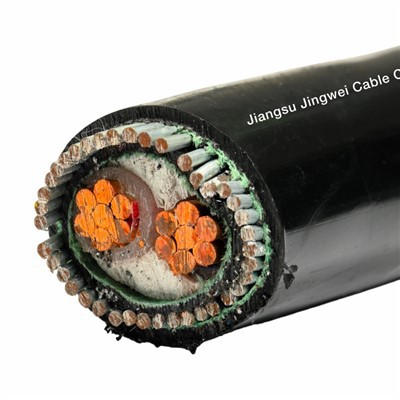
First off, let’s start with the basics that no one tells you: power cables aren’t just wires. They have three core parts—conductors, insulation, and a jacket (or sheath). The conductor is the “pipe” electricity flows through, insulation keeps the juice from leaking where it shouldn’t, and the jacket is the outer layer that protects everything from dirt, moisture, UV rays, or whatever else your job throws at it. Mix and match these parts, and you get totally different cable types for totally different uses.
Let’s dive into the main ones you’re actually going to encounter, no confusing subcategories unless they’re super relevant.
First up: Building Wire (Romex is the brand name everyone uses, even if it’s generic). This is the stuff you see inside homes, offices, or any finished building. It’s usually copper conductors (copper is king for building wires—more conductive than aluminum, easier to work with), wrapped in PVC insulation (cheap, flexible, works for indoor temps), and a thin plastic outer jacket. Wait, why do some have two wires and some three? Oh right, the extra one is the ground wire—non-conductive, just for safety, so if something goes wrong, electricity doesn’t shock you. This is for permanent, dry, indoor use only—don’t take this outside or bury it. I’ve had customers try that before, and let’s just say the cable turned into a soggy, useless mess in a week. Pro tip: if you’re wiring a new closet or a living room, this is your go-to.
Next: NM-B Cable (that’s the technical name, but no one says it). Wait, hold on—you’ve heard Romex, and Romex is NM-B. I just didn’t want to lose you in the brand name. NM-B stands for Non-Metallic, type B. It’s the updated version of old Romex, rated for 600 volts, which is perfect for standard 120/240V household circuits. The big difference from old NM is that it has a better flame retardant and can handle a bit higher temps, so code-approved in almost every state now. If an electrician quotes you NM-B, that’s exactly the Romex-style stuff they’re installing. No need to overcomplicate this—just know it’s for indoor, wall, ceiling, or floor runs in dry locations.
Now, if you need something to go outside or underground? Don’t even think about grabbing that Romex. That’s where Service Entrance Cable (SE Cable) or Underground Feeder (UF Cable) comes in. Let’s split these two because they’re super different. SE Cable is for bringing power from the utility pole to your main electrical panel—so it’s the big heavy stuff outside, usually running from the street to your house. It has a metal or plastic sheath, and it’s rated for outside use, but you can’t bury it directly. You need a conduit (a plastic or metal pipe) to protect it when it’s underground. Then UF Cable—this is the bad boy you can just bury straight in the dirt, no conduit needed. It’s moisture-resistant, UV-resistant, and can handle direct burial. We sell a ton of UF for people putting in outdoor lighting, garden power features, or even a detached garage. Last year, a customer used it to run power to their backyard pizza oven and hasn’t had a single issue—best part is they didn’t have to hire an electrician to run conduit, which saved them hundreds.
Moving from residential to industrial—because if you’re running a factory or a warehouse, regular Romex won’t cut it. That’s where Power Cords (Heavy-Duty) or Armored Cable (BX, again brand name, generic now) come in. Wait, armored cable is metal-clad, right? The metal sheath isn’t just for show—it protects the wires from physical damage, like if a forklift bumps into it in a warehouse, or if it’s running through areas where rodents might chew. It’s still indoor, but way tougher than NM-B. Then there are the heavy-duty power cords—like the ones for air conditioners, construction equipment, or generators. These have thick rubber jackets (not plastic, because plastic gets brittle when it’s cold or flexed a lot) and are rated for high amperage. I saw a construction crew last summer using our 10-gauge rubber cord to power their concrete saws in 90-degree heat, and it didn’t even fray after 3 months of dragging across dirt and asphalt. Pro tip here: always match the gauge (that’s the wire thickness) to the amperage of what you’re powering. Too thin, and it overheats—we’ve replaced so many burned-out cords from people using a 15A tool with a thin 18A cord. Don’t be that guy.
Now, if we’re talking about something that’s not just plugging into a wall—like big power lines between buildings, or power to a substation? That’s Medium-Voltage (MV) and High-Voltage (HV) Cables. These are the ones that carry way more power, like 1kV to 69kV for MV, and over that for HV. They’re not the same as your house wire—they have extra insulation (usually cross-linked polyethylene, XLPE, which can handle way higher voltages and temps) and sometimes a metal shield to contain the electricity, so it doesn’t leak into the ground or surrounding stuff. We supply these to commercial parks and solar farms—last year, we did a bulk order for a new solar array in Texas, and those cables had to be buried 3 feet deep because they’re moving 13kV of power. This is not a DIY project—you need a licensed electrician or lineman for this, no exceptions. Messing with high-voltage cables is deadly, full stop.
Wait, I can’t forget Specialty Power Cables—the random ones that are for super specific jobs, and people always ask about these. Like Solar Cables (PV Cables)—those are the ones that connect solar panels to the inverter. They’re UV-resistant, heat-resistant, and rated for outdoor use, even in direct sun for 20+ years. We sell metric tons of these for rooftop solar installs, and they come in different lengths, but wait—don’t try to splice PV cable yourself. It needs special crimpers and connectors, so leave that to the pros. Another specialty one: Elevator Cables—they have to be flexible, hold up to constant movement, and carry both power and signals for the elevator controls. Or Welding Cables—super thick, flexible copper, designed for the massive amperage welding machines put out. A friend of mine is a welder, and he swears by our welding cables—they don’t kink or overheat even when he’s running a 200A machine all day.
Now, let’s talk about the stuff that trips people up: aluminum vs copper conductors. A lot of folks think aluminum is cheaper, so they go for it. And it is cheaper, but it’s also less conductive, heavier, and more prone to corrode over time. We do sell aluminum cables, but only for specific applications (like big service entrance runs where cost is a big factor), and we always tell customers to upgrade to copper if it’s for residential or indoor use. Copper is more expensive upfront, but it lasts longer, works better, and has less risk of overheating. I’ve seen aluminum wires loosen at connections and cause fires—so that’s not a gamble worth taking for most people.
Another big question: what’s that numbering on cables, like 14/2 or 12/3? Let’s keep it simple: the first number is the gauge (thickness—lower number = thicker wire, more power it can carry), and the second is the number of conductors (including the ground wire, usually). So 14/2 is two conductors plus ground—perfect for 15A circuits (like lights and outlets). 12/3 is three conductors plus ground—great for 20A circuits, or if you need a hot, neutral, and another hot for a 240V outlet (like a dryer or AC). If you don’t know what gauge you need, just ask your electrician or send us a message—we’re happy to help, no pushy sales stuff.
Now, let’s get real—common mistakes I see all the time. First, using indoor cable outside. Romex can’t handle UV rays, so after a few months in the sun, the PVC jacket gets brittle, cracks, and the insulation goes bad. That’s a quick way to lose power, or even get shocked. Second, undersized cables. Like I said earlier, thin wires = overheating, which can lead to fires. Third, not checking the rating. Some cables are only for dry locations, some are for wet, some for buried—using the wrong one in the wrong place is a recipe for disaster.
If you’re wondering which cable is right for your project, let’s recap quick:
- Finished indoor space (home, office): NM-B (Romex)
- Outside, near the house: UF or SE in conduit
- Buried in yard, garage power: UF
- Warehouse, construction, heavy tools: Armored cable or heavy-duty rubber cord
- Solar installs: PV cable
- Big power, commercial/utility: MV/HV cables
Look, I’m not here to lecture you—just to save you the headache of wasting money on the wrong cable, or worse, dealing with a safety issue. If you have questions, whether you need a small roll for a DIY project, bulk orders for a commercial build, or advice on which cable works best for your setup, we’re here to help. No confusing sales calls, no hidden fees—just straight answers and quality cables. Hit us up when you’re ready to chat through your needs, and we’ll get you sorted.
Control Cable Now, quick references so you know this isn’t just me rambling:
- National Electrical Code (NEC) – 2023 Edition, Article 334 (Non-Metallic-Sheathed Cables), Article 340 (Underground Feeder and Branch-Circuit Cables)
- Copper Development Association – Electrical Conductors: Copper vs Aluminum Performance
- Solar Energy Industries Association (SEIA) – Standard for Photovoltaic (PV) Cables and Connectors
- National Fire Protection Association (NFPA) – Safety Guidelines for Medium-Voltage Power Cables
- Underwriters Laboratories (UL) – UL 83 Standard for Safety for Non-Metallic-Sheathed Cables
Jiangsu Jingwei Cable Co., Ltd.
As one of the leading power cable manufacturers in China, we warmly welcome you to buy bulk durable power cable made in China here from our factory. All cables are with high quality and competitive price. For pricelist and free sample, contact us now.
Address: Industrial Concentration Zone C, Guanlin Town,Yixing City, Jiangsu Province
E-mail: marilyn.wang@jingwei-cable.com
WebSite: https://www.jwcable.com/
